What kills the bacteria in a treatment system? The threats and how to avoid them
The bacteria in a domestic treatment system are most often killed by chlorine products and disinfectants, caustic soda drain unblockers, salt from water softener regeneration, acidic condensate from a condensing boiler, strong medicines (antibiotics, chemotherapy) and a lack of oxygen when the blower is switched off. Ordinary cleaning and washing in reasonable amounts usually do no harm. The problem starts when a harmful substance gets into the system regularly, or in a large dose all at once.
Below you’ll find the full list of threats, how to avoid them and the signs that tell you the bacteria in your system are weakening.
Why are bacteria so important?
Bacteria are what actually treat the wastewater. Without them, a treatment system is just a tank that sends untreated wastewater into the soil.
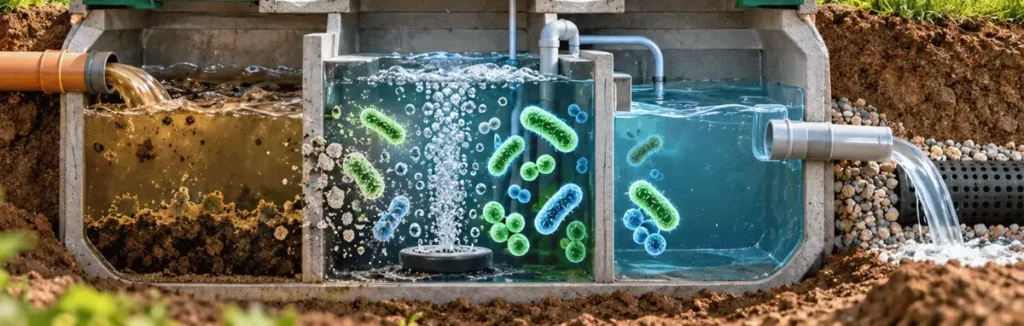
In the primary tank, anaerobic bacteria break down some of the organic matter and reduce the amount of sludge. In the aeration chamber, aerobic bacteria break down the remaining pollutants and turn toxic ammonia into nitrates. Each group has its weak spots: some can’t tolerate chlorine, others a lack of oxygen, and nitrifying bacteria are sensitive to almost everything, from salt to low pH.
What kills the bacteria in a treatment system? The biggest threats
The biggest threats are disinfectants, corrosive drain unblockers, salt, acidic condensate, strong medicines and a lack of oxygen. The table shows how they get into the system and what you can do.
| Threat | Where it comes from | What to do |
|---|---|---|
| Chlorine and disinfectants | Bleach, chlorine toilet gels and blocks, antibacterial products | Choose chlorine-free products and don’t disinfect the toilet ‘just in case’ |
| Caustic soda and strong acids | Drain unblockers, limescale removers with hydrochloric acid | Clear blockages mechanically or with a biological product |
| Salt | Water from water softener regeneration | Route it separately, bypassing the biological chamber |
| Acidic condensate | A condensing boiler | Fit a condensate neutraliser |
| Strong medicines | Antibiotics, chemotherapy, unused medicines flushed down the toilet | Never flush medicines, and check the sludge more often during long courses of treatment |
| Lack of oxygen | A blower that is switched off or faulty, clogged diffusers | Don’t switch the blower off and have it serviced regularly |
| Too much grease | Frying oil poured down the sink | Collect grease in a jar and put it in the bin |
| Solvents, paints, oils | Washing out brushes, leftover garden and car chemicals | Take them to a hazardous waste collection point |
Chlorine and disinfectants
Disinfectants are designed to kill microorganisms, and they don’t distinguish between bacteria that cause disease and the ones working in your treatment system. A single use of bleach is usually diluted in the wastewater. The real damage comes from a constant supply, for example from a chlorine block in the toilet cistern that releases chlorine with every flush.
Drain unblockers and limescale removers
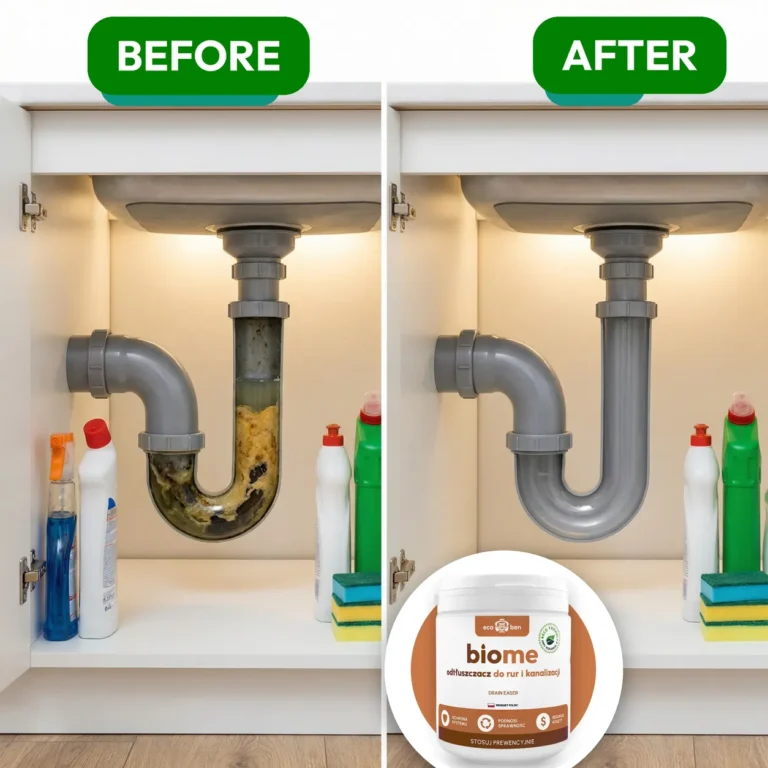
Caustic soda drain unblockers have a pH of about 14 and are corrosive. Limescale removers containing hydrochloric acid work in a similar way, at the other end of the pH scale. A large dose of a product like this can upset the bacteria for a while. Instead of chemicals, clear the pipe with a plunger or a drain snake, and use a biological product for prevention.
Salt from the water softener
When it regenerates, a water softener releases concentrated brine. This is one of the most serious threats, because it happens regularly, once every week or two, and nitrifying bacteria are very sensitive to salt. The best solution is a separate drain for the regeneration water that bypasses the biological chamber.
Condensate from the boiler
Condensate from a condensing boiler is acidic, usually with a pH between 2.5 and 4.5. If it reaches the treatment system without being neutralised, it can upset the biological processes in the reactor. A condensate neutraliser is a small expense: it raises the pH before the condensate reaches the wastewater.
Antibiotics and other strong medicines
Strong antibiotics and chemotherapy drugs can weaken the bacteria in a treatment system, because part of the medicine is passed out in urine. The Vermont Department of Environmental Conservation (USA) recommends that during chemotherapy the tank is emptied more often, that during a long course of treatment you check the condition of the sludge after a few months, and that you avoid strong cleaning products during this time. Never flush unused medicines down the toilet.
Lack of oxygen
In a biological treatment system, the blower supplies oxygen to the aerobic bacteria. When it is switched off or faulty, these bacteria weaken quickly, and putrefaction starts in the chamber where it shouldn’t be happening.
Do laundry, dishwashing and cleaning harm the bacteria?
At normal doses, usually not. The damage comes mainly from large doses all at once and from chlorine-based or antibacterial products.
Detergents from the washing machine and dishwasher mix with the rest of the wastewater and are heavily diluted. Even so, it’s worth spreading your laundry across the week rather than doing several loads on the same day, because a large amount of water and detergent at once can wash the activated sludge out of the system and overload it. Choose phosphate-free detergents without chlorine bleach, and chlorine-free cleaning products.
What else weakens the bacteria, even if it doesn’t kill them?
Bacteria also weaken because of things that aren’t toxic but disrupt the way the system works: a lack of wastewater, too much water at once and low temperatures.
- Long absences: without wastewater, the bacteria have no food and their numbers fall.
- A large surge of water at once: for example when rainwater gets into the foul drains. The water washes bacteria and sludge out of the chambers.
- Cold: at low temperatures bacteria work more slowly, especially the ones that remove nitrogen.
- Wet wipes, sanitary products, cotton buds: they don’t kill bacteria, but they block pumps and pipes. Wipes containing antibacterial agents weaken the bacteria as well.
How can you tell the bacteria in your system are dying?
The most common signs are a smell, cloudy effluent and sludge or crust building up quickly:
- a rotten-egg smell (hydrogen sulphide) around the system;
- cloudy, grey effluent instead of clear water;
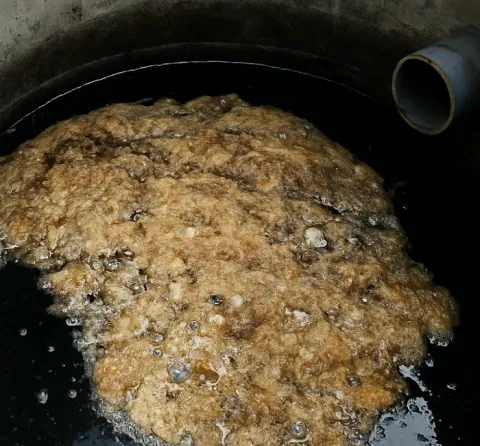
- a thick crust in the primary tank or too much foam in the chamber;
- desludging is needed more often than before;
- wet, sunken ground above the percolation area, or water draining more slowly in the house.
How do you restore the bacteria after a problem?
First remove the cause, then give the bacteria time. A biological product can speed up recovery, but it won’t help if the harmful substance keeps getting into the system.
- Find the source: the chlorine block, the drain unblocker, the water softener, the condensate, the blower that was switched off.
- Check the blower and the primary tank. If the primary tank is full, have it desludged.
- For at least a week, don’t pour any strong chemicals down the drain.
- Top up the bacteria. After a problem or a long break, you can seed the system with a larger dose of bacteria, then support it with a regular dose.
Worth knowing: not all experts recommend routinely adding bacteria to a system that is working well. They make the most sense after a problem, after strong chemicals, after a long break and when the system is constantly loaded with detergents.
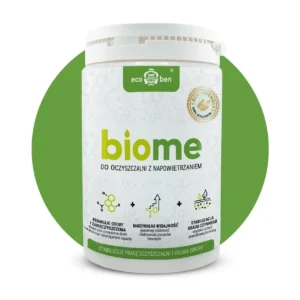
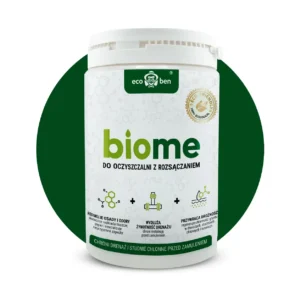
For start-up and for recovery after a problem, there’s BioMe Starter Care. The 300 g pack is split into two doses of 150 g. Each dose is dissolved in a bucket of lukewarm water (30–40°C) and poured into the primary tank or chamber, the second two days after the first. For the following week, don’t pour chlorine or caustic soda into the system. For everyday maintenance, the bacteria are supported by BioMe Wastewater Solution: 20 g once a week, down the toilet, for a system of about 3 m³.
Frequently asked questions
Will a single use of chlorine bleach wreck my treatment system?
Usually not, because the chlorine is diluted in the wastewater and reacts quickly with organic matter. The damage comes from regular use of chlorine products, especially a block in the toilet cistern that releases chlorine with every flush.
Do vinegar and bicarbonate of soda harm the bacteria?
Not in the amounts used for cleaning. They are heavily diluted in the wastewater and don’t kill the bacteria. Don’t confuse bicarbonate of soda with caustic soda, which is corrosive.
Do antibiotics kill the bacteria in the system?
They can weaken them, especially strong antibiotics and chemotherapy drugs. During a long course of treatment, check the sludge more often and avoid strong chemicals during that time.
Can I switch off the blower while I’m away?
Usually not, unless the system manufacturer provides for this. Without oxygen, aerobic bacteria weaken quickly, and when you get back the system needs time to work properly again.
How long do the bacteria take to recover after a problem?
Usually a few weeks, because nitrifying bacteria grow slowly. Breakdown of organic matter returns faster, nitrogen removal more slowly. There’s just one condition: the harmful substance must stop getting into the system.
Sources
- Vermont Department of Environmental Conservation: Onsite Wastewater System Guidelines for Patients Taking Antibiotics or Chemotherapy.