

BioMe Septic Tank Balance Bacteria for Septic Tanks
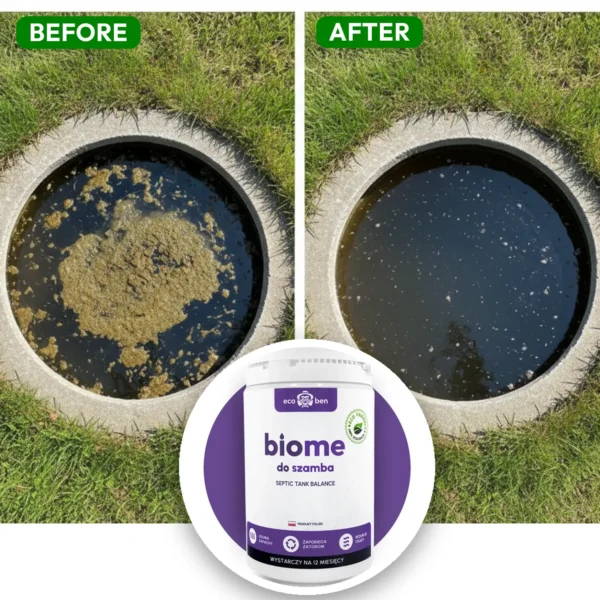
Bioactivator for continuous use in a septic tank. Bacillus bacteria with fermentation-derived enzymes break down the sludge on the bottom and slow down how fast the tank fills.
- Less frequent desludging: less sludge in the tank
- Fewer odours at the lid and in the garden
- Down the toilet, 20 g once a week
Looking for this product for your business?
We sell wholesale, to distributors and under your own brand. Tell us what you need and we will prepare an offer.
Request a wholesale offer- Manufacturer with its own laboratory
- Wholesale, private label, distribution
- Shipping from Poland across Europe
- Less sludgeBacteria break down organic deposits on the bottom
- Fewer odoursTackles the source of the smell, doesn’t mask it
- Safe for your tankpH 5–8, won’t attack concrete, pipes or seals
- 20 g a weekDown the toilet, no need to lift the lid
A septic tank isn’t just a container. It’s a living process.
Bacillus bacteria with fermentation-derived enzymes break down the sludge at the bottom of the tank and the crust on top. You pour the dose down the toilet once a week, without lifting the lid.
- Less sludgethe tank fills more slowly
- Fewer odourstackles the source, doesn’t mask it
- pH 5–8safe for concrete, pipes and seals
- 500 g or 1 kg25 or 50 weekly doses
A smell at the lid, a crust and ever more frequent desludging
The smell comes from putrefaction gases: hydrogen sulphide, ammonia, mercaptans. They appear when the tank is short of the bacteria that break down organic matter in a controlled way.
- A persistent smell around the tank, especially in summer
- A thick crust of fat on the surface
- Heavy deposits on the bottom
- Desludging is needed more and more often
A fresh dose of bacteria every week
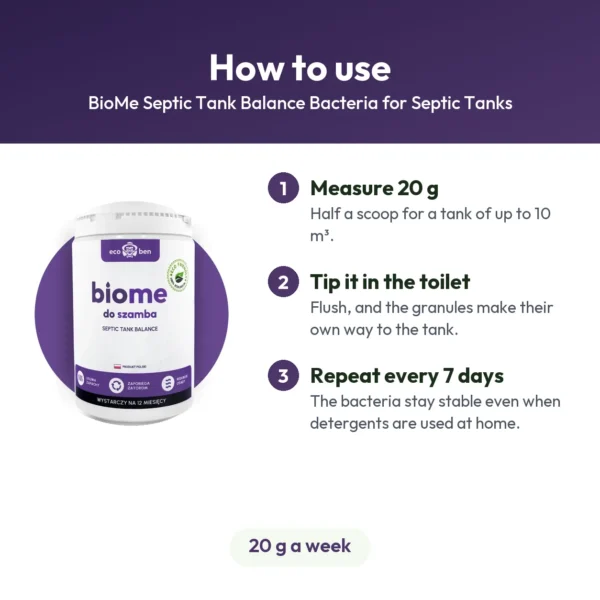
Measure 20 g
Half a scoop for a tank of up to 10 m³.
Tip it in the toilet
Flush, and the granules make their own way to the tank.
Repeat every 7 days
The bacteria stay stable even when detergents are used at home.
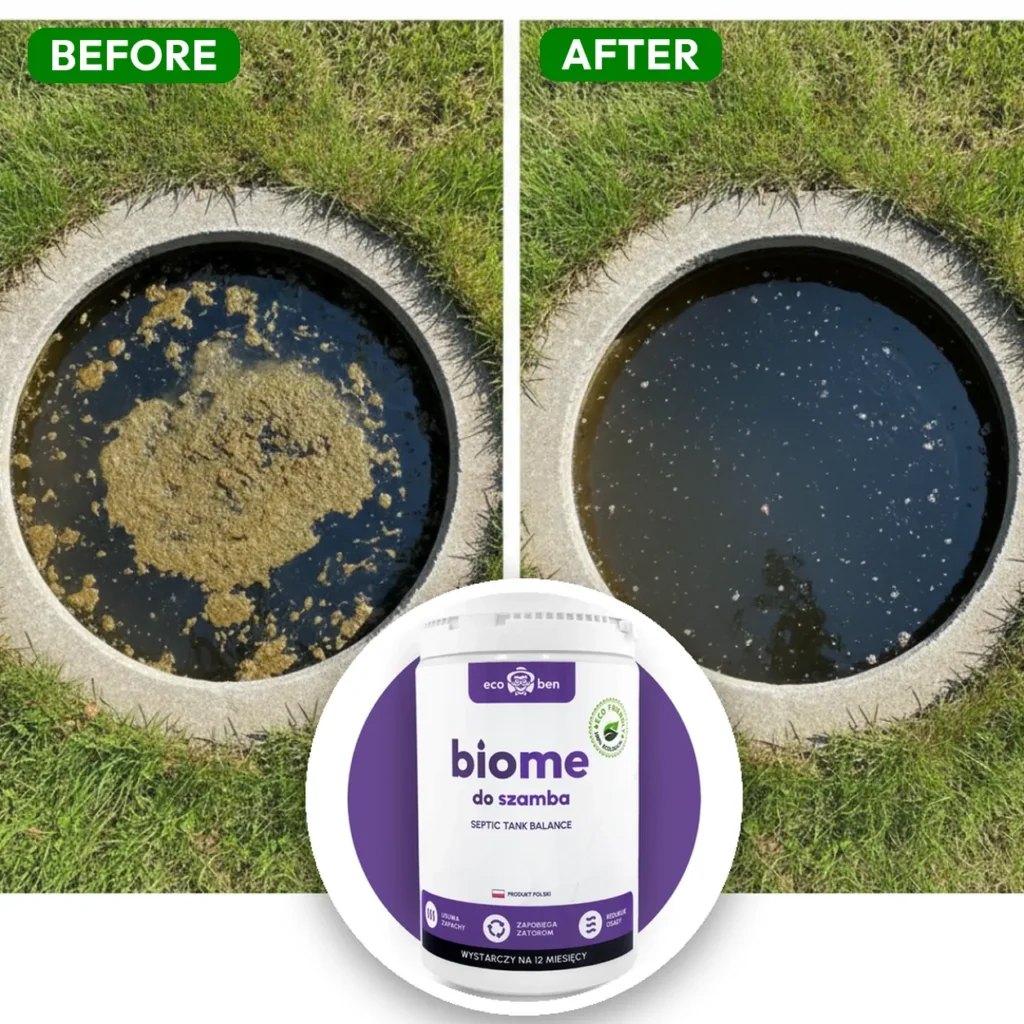
The crust breaks down gradually
The bacteria and enzymes break down the surface crust and the sludge, and the tank fills more slowly.
Choose your dose by the state of the tank
Standard dose
- Dose
- 20 g (½ scoop)
- Tank
- up to 10 m³
- How often
- every 7 days
Intensive dose
- Dose
- 40 g (1 scoop)
- How often
- every 7 days for 2–3 weeks
- Then
- the standard dose
Use the intensive dose on first use, after a long break (for example after the winter) or after strong chemicals. For tanks over 10 m³ or households of 6 or more, use 40 g a week as the standard dose.
If bleach, a chemical unblocker or condensate from a condensing boiler has got into the tank, wait 48 hours, then use the intensive dose.
What this product won’t do
It won’t replace desludging completely
Sand and mineral deposits stay in the tank.
It won’t work overnight
The bacteria need a few weeks to build a stable population. Results usually show after 6–8 weeks of regular use.
It won’t fix a fully blocked percolation area
For percolation pipes, use BioMe Drain Unblocker.
What our customers ask
When will I see the first results?
The smell usually eases in the first few weeks. A thinner crust and runnier sludge come with regular use, within 6–8 weeks.
Do I need to open the tank lid?
No. Tip the dose into the toilet and flush. The granules dissolve completely.
Does it work in a treatment system too?
Yes, it also supports the bacterial life in domestic wastewater treatment systems. For aerated systems and systems with a percolation area, we also have dedicated products.
I have a holiday home. How do I use it after the winter?
Start the season with the intensive dose (40 g a week) for 2–3 weeks, then switch to 20 g a week.
How long does one pack last?
At 20 g a week, 500 g lasts about six months (25 doses) and 1 kg about a year (50 doses).
Everything you need to know
Ingredients
Sodium chloride, Bacillus bacteria with fermentation-derived enzymes, maltodextrin, lemon fragrance, trace elements. Beige-brown granules, pH 5–8, fully water-soluble, biodegradable.
Storage
- In the closed pack, somewhere cool and dry (up to 25°C)
- Away from moisture
- Out of reach of children and pets, away from food
CLP classification and precautions
This product is not classified as hazardous under CLP (EU 1272/2008). EUH208: contains enzymes, may produce an allergic reaction. Avoid raising dust when measuring, wear gloves and wash your hands after use.
Related products
-
SeptiGo Tablets for Septic Tanks and Treatment Systems
View product -
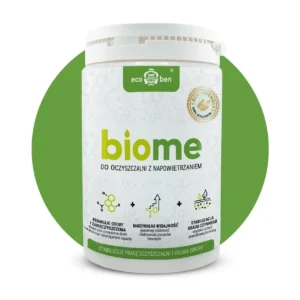
BioMe SBR Booster Bacteria for Aerated Treatment Systems
View product -
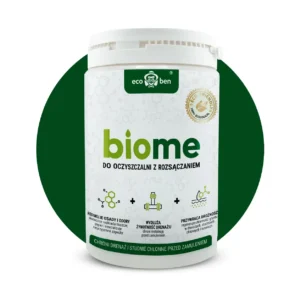
BioMe for Systems with Soil Infiltration, Bacteria for Percolation Areas and Soakaways
View product -
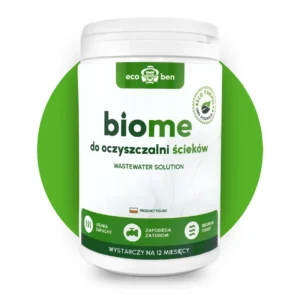
BioMe Wastewater Solution Bacteria for Treatment Systems
View product